Lookalikes with very different stories

If the Noisy Miner and the Common Myna entered a bird lookalike competition, they'd almost certainly make the final. 

In Australian backyards, the Noisy Miner and Common Myna are two regularly seen bird species, with the Noisy Miner ranking the 3rd most common bird seen in our Aussie backyard bird count across the country in 2025, and the Common Myna ranking the 10th most common bird seen. 

However, as both species lookalike, many people are often confused when it comes to identifying which is which. 

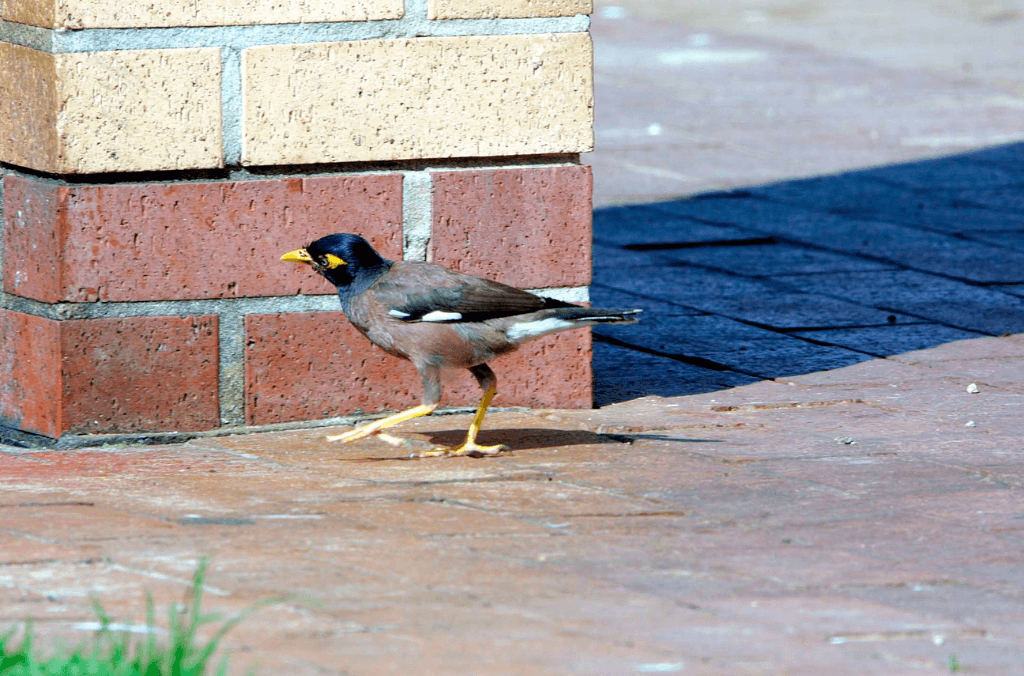
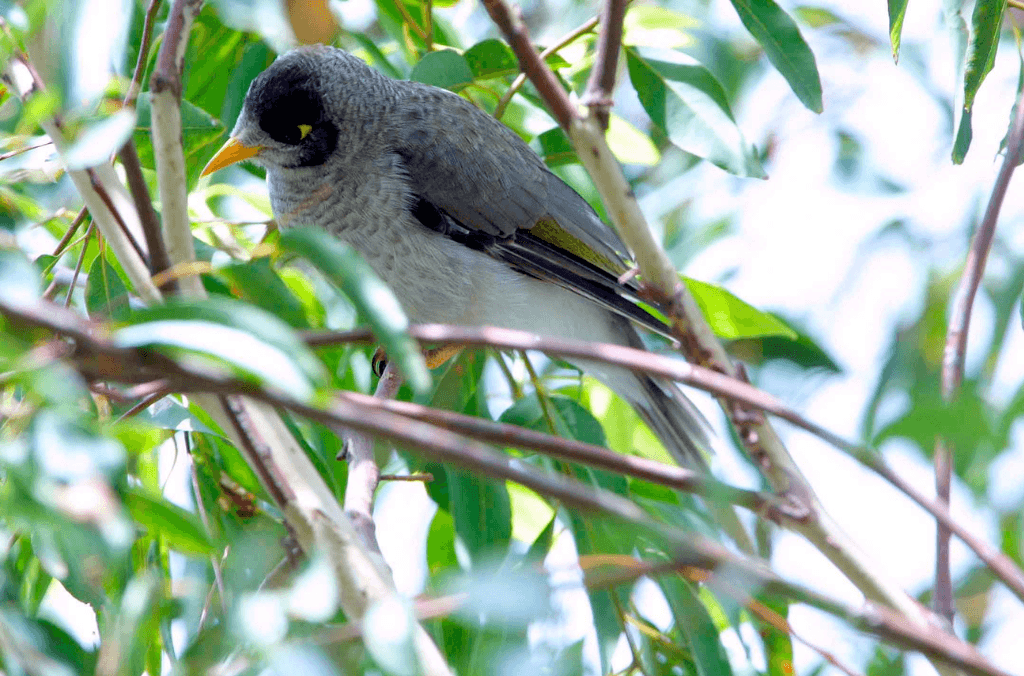
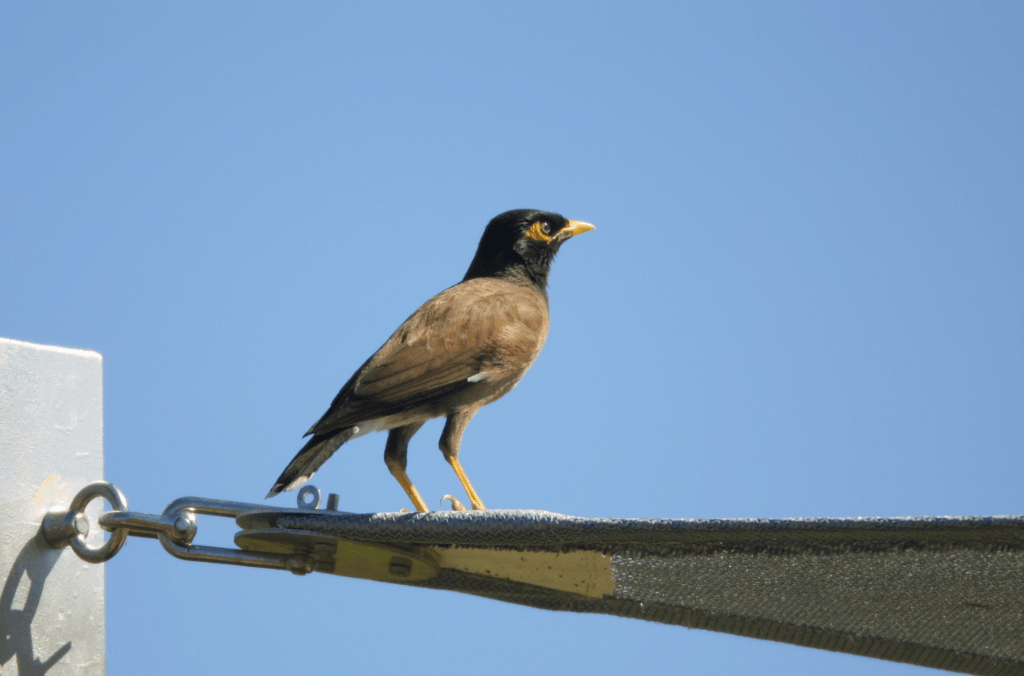
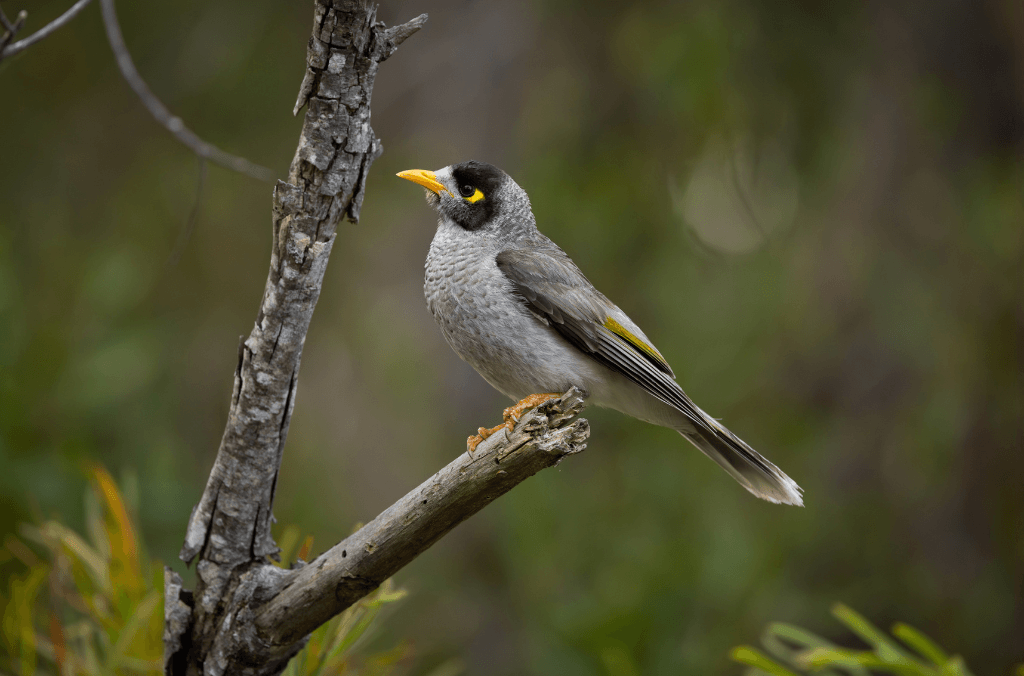
Both birds are small to medium in size (15-30 cm), have yellow beaks, yellow legs and feet, and black heads with yellow skin around their eyes. And both birds have a very similar sounding common name. 

But don’t be fooled by these similarities – they are very different birds, and we have highlighted these differences below.

Miner vs Myna: highlighting the differences
Species

Noisy Miner

Common Myna

Appearance

  • Body colour is mostly grey.
  • Wing feathers have yellow-tinged edges. 
     
  • Body colour is mostly brown.
  • Each wing has a distinct white patch that is very easy to see when the bird flies.  


Origin

  • Native honeyeater to eastern and southeastern Australia.
  • As a member of the Meliphagidae family, the Noisy Miner is grouped with honeyeaters due to shared biological traits like diet, territorial behaviour, and ecological roles.
  • Like many Australian honeyeaters, it feeds on nectar and insects, acts as a plant pollinator, and fiercely defends its home area.
  • Introduced species to Australia from Southeast Asia.
  • Introduced to Melbourne in the 1860s to combat caterpillars and insects around local market gardens and later introduced to Queensland in the 1980s to control agricultural grubs and insects, the species readily became established in metropolitan areas across eastern Australia following these unsuccessful pest control projects. 
     

Sound

  • Performs a rapid-fire medley of loud 'pwee pwee pwee' and a piping 'pee pee pee' when alarmed.
  • Listen here
  • Performs a collection of varied calls and chatter ranging from mellow whistles to harsh, grating churrs; sometimes sounding like an improvised jazz number.
  • Listen here

Tail posture and movement

  • Tail is frequently flicked or pumped up and down as it moves or lands.
  • Tail is held down in a steady, flat posture; they tend to strut or walk rather than pump their tails.

Feeding

  • With nectar as their primary energy source, they use their brush-tipped tongues to sip flower nectar from native plants such as eucalyptus, grevilleas and bottlebrush.
  • With insects as essential protein, they also hunt for insects amongst leaves and tree bark.
  • Both an accomplished scavenger and an opportunistic forager, functioning as an adaptable omnivore that shifts its feeding strategy based on immediate food availability.  
  • Feeds on almost anything, including insects, fruits and vegetables, as well as human food scraps and domestic pet food if available.

Breeding

  • Breeding season: July to December
  • Breeding pairs are formed over the breeding season.
  • The female constructs a cup-shaped nest, usually amongst dense foliage, made from twigs, bark, leaves and spiderwebs.
  • Favoured nesting locations are amongst moderately dense foliage in trees and shrubs, often along woodland borders, or fragmented patches.
  • The female incubates the eggs alone, but both sexes feed the young birds.
  • During the breeding season, pairs form small to large cooperative colonies. This species exhibits coordinated aggression towards other bird species year-round, which intensifies during the breeding season. 
  • Breeding Season: October to March.
  • Breeding pairs mate for life and stay together outside of the breeding season.
  • Both sexes build a messy nest from a variety of materials, including leaves, grasses, feathers and sometimes assorted items of rubbish.
  • Favoured nesting locations are in cavities, within walls and ceilings of buildings, or tree hollows requiring eviction of native species.
  • Both sexes incubate the eggs and feed the young birds.
  • During the breeding season there is usually considerable competition for nesting sites between pairs. They can also be physically aggressive during breeding season with other species, particularly when taking nesting hollows from other birds, including native parrots.


Although the Noisy Miner and Common Myna lookalike, are both seen often in backyards across metropolitan areas of eastern Australia, and are both known for being notoriously aggressive – there are many differences that distinguish the two. 

Can you tell the difference?